
Tamil Nadu Chief Minister M K Stalin celebrated the defeat of the Constitution Amendment Bill in the Lok Sabha, emphasising the unity of the south and the triumph of democracy. The bill aimed to implement reservation for women in legislatures in 2029 and increase Lok Sabha seats. Stalin criticised the bill as weakening the balance of the union and asserted Tamil Nadu's commitment to justice, dignity, and federalism.

The Punjab Assembly has passed the Punjab Prisons and Correctional Services Bill, 2026, to modernise the prison system, and the Societies Registration (Punjab Amendment) Bill 2026, to enhance transparency and accountability of societies.

The Transgender Persons (Protection of Rights) Amendment Bill, 2026, which provides graded punishment for bodily harm to transgender persons, has been approved by the President of India. The bill has faced criticism from opposition MPs for excluding gays and lesbians and for the establishment of an authority to determine transgender status.
Opposition MPs and transgender rights activists are calling for the withdrawal of the Transgender Persons (Protection of Rights) Amendment Bill, 2026, citing concerns that the proposed changes could dilute the rights of transgender individuals.
Opposition MPs and transgender rights activists are urging the withdrawal of the Transgender Persons (Protection of Rights) Amendment Bill, 2026, citing concerns that the proposed changes could weaken the rights of transgender individuals.

Finance Minister Nirmala Sitharaman on Monday introduced the Taxation Laws (Amendment) Bill, 2025, which aims to provide tax exemptions to subscribers of the Unified Pension Scheme.

Insurance intermediaries who receive disproportionately high commissions are likely to see a decline in their payouts, post the new Insurance Amendment Bill. The new Bill gives the Insurance Regulatory & Development Authority of India (Irdai) the power to disgorge unlawful gains made by insurers and intermediaries as well as the right to limit commissions paid to intermediaries.

The insurance industry is trying to get to grips with provisions in the proposed Insurance Amendment Bill, which gives additional powers to the Insurance Regulatory and Development Authority of India (Irdai), while there is ambiguity in the very definition of the insurance business, according to industry experts.

The Lok Sabha has approved an amendment to the Transgender Persons (Protection of Rights) Act, sparking debate over its impact on LGBTQ rights and the definition of 'transgender' in Indian law.
The Indian Parliament has passed a bill amending the Transgender Persons (Protection of Rights) Act 2019, focusing on biological discrimination and excluding social orientations from its scope. The bill aims to provide legal recognition and protection to transgender individuals facing discrimination due to biological issues, while also introducing graded punishments for harm inflicted on them.
President Droupadi Murmu has given her assent to the Waqf (Amendment) Bill, 2025, which has sparked controversy and legal challenges. The Bill, passed by Parliament after heated debates, has been criticized by opposition parties as "anti-Muslim" and "unconstitutional". The government, however, maintains that the reform will benefit the Muslim community. Several petitions have been filed in the Supreme Court challenging the constitutional validity of the Bill, alleging discrimination against Muslims and undermining their religious autonomy. The Bill repeals the Mussalman Wakf Act, 1923, and introduces restrictions on Waqf properties and their management, which have raised concerns about the impact on the Muslim community.

A leading Catholic Church daily in Kerala has described the Waqf amendment bill as a crucial test of secularism in Parliament, urging MPs to support it. The editorial in Deepika daily comes as the union government prepares to table the bill for parliamentary consideration. The editorial calls the bill a test of secularism and warns MPs that failing to support it would mark them in history as endorsing religious fundamentalism. The paper added that the bill will also put an end to the injustices faced by thousands of Hindu, Christian, and Muslim citizens who have suffered due to the Waqf law. The editorial also recalled the recent statement addressed to Kerala MPs by Kerala Catholic Bishops' Council (KCBC) where the KCBC President Cardinal Mar Baselios Cleemis Catholicos urged amending provisions in the Waqf law that validate claims over land which people of Munambam have lawfully possessed. Opposition parties have slammed the bill as "unconstitutional" and against the interest of the Muslim community.

Lok Sabha Speaker Om Birla announced that voting on three crucial bills, including amendments to the women's quota law and the establishment of a delimitation commission, will take place at 4 PM on Friday, following an anticipated 15-18 hour debate.

According to a bulletin issued on Wednesday, 'The Constitution (One Hundred and Thirty-First Amendment) Bill, 2026', 'The Delimitation Bill, 2026' and 'The Union Territories Laws (Amendment Bill), 2026' will be introduced and debated for passage in the Lower House.

The ruling NDA coalition in India faces a significant challenge in passing the women's reservation bill in Parliament due to insufficient numbers. The bill requires a two-thirds majority in both houses, and the NDA needs to secure additional support or abstentions from other parties to achieve this.

Lok Sabha takes up FCRA Amendment Bill amid opposition protests.

Opposition members in the Lok Sabha have questioned the government's decision to move a bill to amend the 2023 women's quota law before bringing the principal Act into force.

The Indian government is reportedly developing new proposals to increase Lok Sabha seats by 50 per cent across all states. This initiative aims to address concerns from southern states regarding potential political power reduction due to population-based delimitation, while also facilitating the operationalisation of the women's quota law before the 2029 Lok Sabha elections.
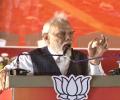
West Bengal Chief Minister Mamata Banerjee has accused the BJP-led central government of using the proposed amendment to the women's quota law as a front for the Delimitation Bill, which she claims will divide the country. She asserted that her party, the TMC, will fight this move at every step.

NDA floor leaders held a meeting after the Constitution Amendment Bill seeking to implement reservation for women in legislatures in 2029 and increase the number of seats of the Lok Sabha was defeated.

A Constitution Amendment Bill aimed at implementing 33 per cent reservation for women in legislatures and increasing Lok Sabha seats was defeated in Parliament, marking a setback for the government's efforts to empower women in politics.

The Congress party has directed its MPs to attend Parliament and protest against the FCRA Amendment Bill, describing it as unconstitutional and a threat to minority organisations. The government asserts the bill aims to enhance transparency and prevent misuse of foreign funds.

In a swift political counter-offensive, the Bharatiya Janata Party and its National Democratic Alliance (NDA) partners have announced a massive, nationwide protest campaign targeting the Opposition.

The Women's Reservation Act 2023, mandating 33 per cent quota for women in legislatures, has been enacted, but its immediate implementation is unclear due to ongoing parliamentary debates and delimitation requirements.

A rebellion within the Trinamool Congress is expected to significantly increase the NDA's numbers in both the Rajya Sabha and Lok Sabha, bringing the ruling alliance closer to a two-thirds majority needed for constitutional amendments. This shift is driven by upcoming Rajya Sabha elections, TMC MP resignations, and potential support from defecting TMC Lok Sabha members.

Rahul Gandhi accuses the government of using the women's reservation bill as a smokescreen to manipulate India's electoral map and diminish representation for certain states.

Finance Minister Nirmala Sitharaman on Tuesday said that raising the FDI limit to 100 per cent in the insurance sector will help attract more capital, improve competition and increase insurance penetration by making policies more affordable.

Union Home Minister Amit Shah criticises the Congress and its allies for the defeat of the Constitution amendment bill aimed at implementing 33 per cent women's quota in legislative bodies before the 2029 Parliamentary polls.

NDA leaders have defended proposed amendments to the Women's Reservation Act and the Delimitation Bill, 2026, arguing women have waited long enough for reservation, while opposition parties allege the process could undermine India's federal and democratic structure, particularly impacting southern states.

The government has released a set of FAQs to address concerns and clarify the details surrounding the Women's Reservation Bill, which aims to provide 33 per cent quota for women in legislatures.
West Bengal Chief Minister Mamata Banerjee announced that the TMC will support the women's quota bill but opposes the delimitation bill introduced by the Modi government in the Lok Sabha. She also criticised the central government over central agency raids on TMC candidates.

Proposed amendments to the National Anti-Doping Act in India could significantly alter enforcement procedures, granting officers greater authority to search and detain individuals suspected of involvement with banned substances.
NCP (SP) leader Anish Gawande has urged the government to withdraw the Transgender Persons Amendment Bill, 2026, arguing that it undermines the right to self-determination of gender identity and was drafted without adequate consultation.

As more opposition MPs are now aligning with the ruling NDA, sources in the government indicated that possibilities are being explored to give a fresh push to the delimitation legislation in Parliament.

The National Anti Doping Act will be amended to criminalise trafficking and distribution of prohibited substances with a jail term of upto five years, Sports Minister Mansukh Mandaviya said on Thursday.

Akal Takht Jathedar Giani Kuldip Singh Gargajj has given the Punjab government one month to address objections regarding the anti-sacrilege law, the Jaagat Jot Sri Guru Granth Sahib Satkar (Amendment) Act, 2026, which he claims was enacted without consulting the Sikh Panth and interferes in religious affairs.

TMC leader Abhishek Banerjee has urged BJP candidate Ratna Debnath to appeal to PM Modi to ensure the Aparajita Bill, which aims for time-bound punishment for rape convicts, is enacted. Banerjee criticised the BJP's stance on women's safety and highlighted the TMC government's prompt action in a previous rape-murder case.

Its strength is set to increase by 3 seats once the current round of Rajya Sabha polls for 27 seats are concluded on June 28.

The Indian government is reportedly considering increasing the foreign direct investment (FDI) limit in the pension sector to 100 per cent, bringing it in line with the insurance sector. A Bill to amend the PFRDA Act, 2013, is expected in an upcoming Parliament session.

The Lok Sabha is set to expand to 815 seats, with 272 seats reserved for women, according to Union Law Minister Arjun Ram Meghwal. The move aims to implement the women's quota without disadvantaging men or any state. The proposed legislations also include provisions for reservation for women from SC and ST categories within the women's quota.
